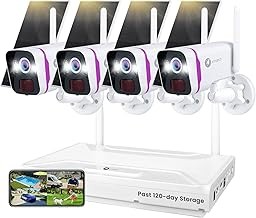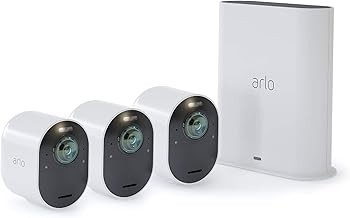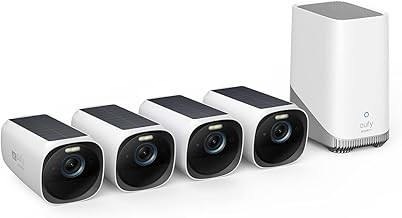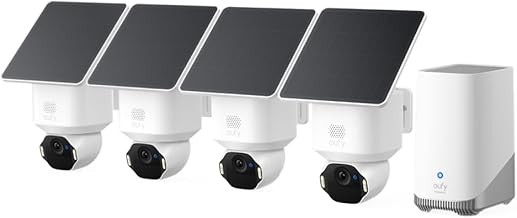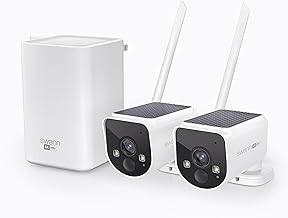
Wireless Home Security Camera Systems – Cloud Storage
Avg Price: $264.47
Notably, the 'Strong' tier in this category is exceptionally rare, with only 1 model(s) achieving a Elite or Strong Winnowl Index. This specific distribution highlights a significant gap between the technical leader and the rest of the market. Furthermore, while our current audit identified 0 'Ghost' brand(s), the high volume of 12 lower-rated units suggests that hardware consistency varies significantly across this class. To ensure a reliable cloud-based setup, we recommend focusing on the 1 model(s) that demonstrated the highest technical scores during our audit.
When you purchase through links on our site, we may earn an affiliate commission.
Our Ranking Methodology
To calculate the Winnowl Index for these 22 models, we use a data-driven audit based on Dynamic Peer-Group Benchmarking. Our scoring is built on three pillars:
- Performance - Driven by Number of Channels, Resolution, Number of Cameras, Night Vision Range.
- Market Value Index - A "Performance-per-Dollar" ratio based on the class average price ($260+).
- Brand Strength - Measures three primary sub-indices: Trust, Reliability, and Customer Support.
Read more about our Methodology
Wireless Home Security Camera Systems – Cloud Storage: Technical Benchmarks
| Spec | Top | Class Average | Bottom |
|---|---|---|---|
| Number of Channels | 4 channels | 2 channels | 1 channels |
| Resolution | 8 MP | 3 MP | 1 MP |
| Number of Cameras | 4 cameras | 2 cameras | 1 cameras |
| Night Vision Range | 100 ft | 54 ft | 23 ft |
Spec Guide
Click a spec below to see how our experts evaluate these ranges.
Number of Channels Guide
Impact: You will likely be locked into a very small system that offers no room for future expansion as your security needs grow.
Technical Analysis: Limited software tier. Systems with 3 or fewer channels are designed for targeted monitoring and lack the scalability needed for a full home network.
Impact: You should find a healthy balance between current coverage and the ability to add a doorbell or extra floodlight to your ecosystem later.
Technical Analysis: Standard consumer headroom. This range allows for the "essentials" of home security with enough expansion room for most standard residential lots.
Impact: You should have the flexibility to scale up to a professional-level surveillance network within your chosen cloud platform.
Technical Analysis: High-capacity scalability. Supports enough channels for complete property-wide integration, allowing for specialized cameras at every angle.
Impact: You should have massive scalability, though you will likely need a professional-grade internet upload speed to support this many simultaneous cloud feeds.
Technical Analysis: Elite enterprise-lite headroom. 10+ channel capacity is a rare, premium feature in the cloud space, indicating a system built for maximum long-term growth.
Resolution Guide
Impact: You will likely struggle to identify distant faces or license plates, as 1080p resolution lacks the pixel density for effective digital zooming.
Technical Analysis: Legacy digital tier. While 1080p is easy on your Wi-Fi bandwidth, it is increasingly considered sub-standard for outdoor forensic identification in 2026.
Impact: You should find a crisp 2K image that provides a significant clarity advantage for identifying visitors and packages.
Technical Analysis: Modern cloud standard. The 3MP-4MP range is the industry sweet spot, balancing high-definition evidence with reasonable cloud upload requirements.
Impact: You should effectively capture professional-grade detail that allows for meaningful digital cropping without the image falling apart.
Technical Analysis: High-performance cloud tier. 5MP-6MP sensors offer superior evidentiary value, though they require robust internet upload speeds to sync smoothly.
Impact: You will likely have the sharpest cloud-based footage available, providing 4K clarity for every motion event.
Technical Analysis: Elite 4K cloud surveillance. Provides maximum visual detail, but users should be aware of the high bandwidth demand and potential for premium subscription costs.
Number of Cameras Guide
Impact: You will likely find yourself limited to monitoring only the primary entry points, leaving the sides or back of your property unmonitored.
Technical Analysis: Starter kit count. A 1-to-2 camera bundle is a great entry point for apartment dwellers but is insufficient for total perimeter security of a standalone house.
Impact: You should effectively achieve full-perimeter coverage, ensuring that your front door, driveway, and backyard are all under a single ecosystem.
Technical Analysis: Residential standard. The 4-to-5 camera range is the industry sweet spot, providing comprehensive security without overwhelming typical home Wi-Fi bandwidth.
Impact: You should be able to achieve high-density monitoring with overlapping angles, though you will likely need a robust mesh Wi-Fi system to maintain stable feeds.
Technical Analysis: Advanced property saturation. Scaling to 6-9 wireless cameras requires significant network overhead to prevent video lag during simultaneous motion events.
Impact: You will likely have one of the most comprehensive wireless networks possible, capable of monitoring an entire estate or multi-building property.
Technical Analysis: Elite wireless capacity. Systems supporting 10+ cameras are pushing the absolute limits of consumer Wi-Fi and often require a dedicated base station hub for stability.
Night Vision Range Guide
Impact: You will likely find the camera is blind to any activity happening beyond your immediate porch or entryway steps at night.
Technical Analysis: Short-range IR. Typically found in budget units, these sensors prioritize energy efficiency over the long-distance illumination needed for yard monitoring.
Impact: You should be able to maintain clear visibility across a typical suburban driveway or yard, identifying threats before they reach the door.
Technical Analysis: Standard perimeter reach. This range is the residential benchmark for wireless units, offering reliable night-time security for the average lot.
Impact: You should effectively illuminate distant dark zones, providing visibility that rivals many high-end wired systems.
Technical Analysis: Long-range infrared. Features high-intensity LEDs that penetrate deep into the darkness, ideal for large unlit lots or rural properties.
Impact: You should feel confident monitoring expansive boundaries or long private drives even in pitch-black conditions.
Technical Analysis: Elite night-reach. 120ft+ visibility is exceptional for wireless systems and suggests a professional-grade hardware build.